
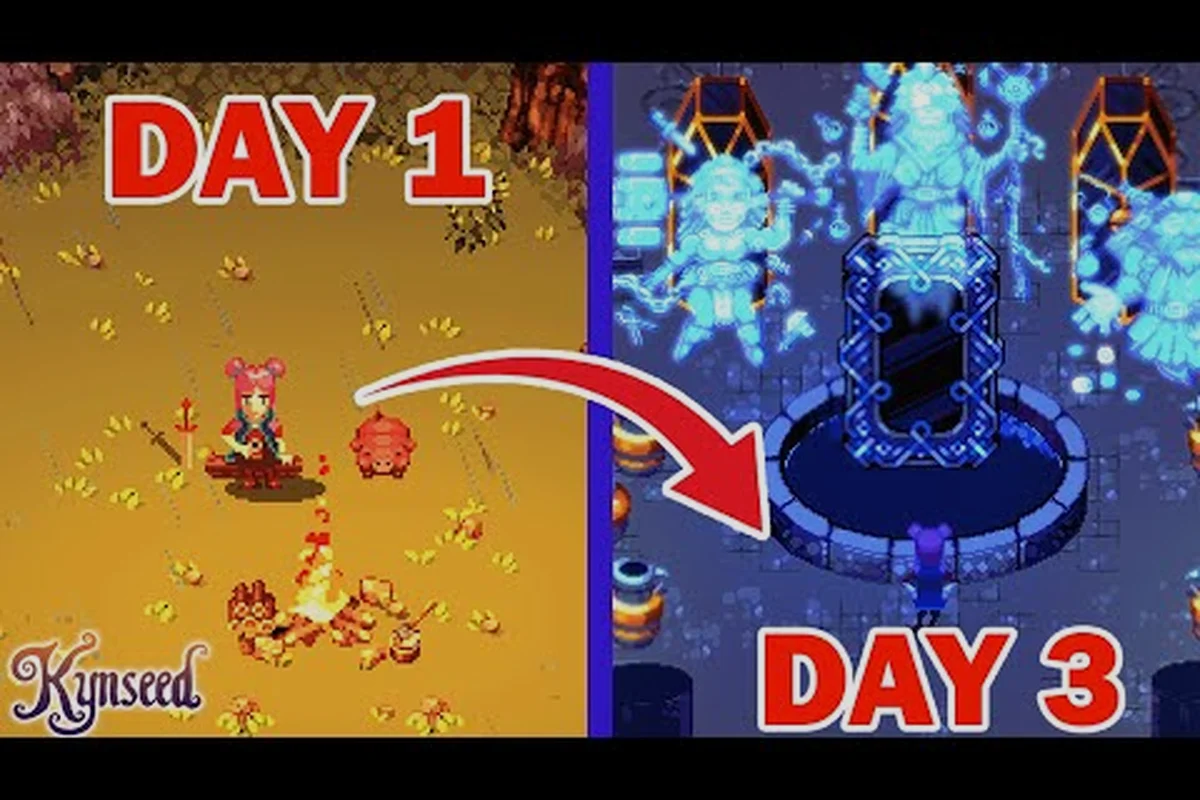
Every relationship in Kynseed carries weight because the game's life-sim engine tracks how villagers perceive you across generations. Unlike typical farming RPGs where affection is a simple number, this Fable-inspired title records your actions, your family history, and even your business reputation when determining who warms up to you. This Kynseed relationship guide breaks down the NPC list, the courting process, and what happens after you say "I do."
The core loop matters more than you might expect: every villager ages in real time alongside your character, which means delaying a courtship can literally cost you the opportunity. If you have been wondering how to marry in Kynseed or which NPCs make the best partners, this guide covers the essential mechanics, gift strategies, and family planning so you can build a legacy that survives your first character's death.
Understanding the Kynseed NPC List and Social Dynamics
The Courtship Gift Economy: Value Tiers and the Apothecary Advantage
Courtship gifts in Kynseed operate on a strict value hierarchy tied to your professions. Common foraged items grant minimal affection, while crafted goods from your Blacksmith or Apothecary yield 3-4x more affection per gift. The Apothecary holds a unique advantage: brewed potions and remedies are universally accepted by all NPCs, including picky candidates who reject Blacksmith weapons or Tavern meals. A single high-tier Apothecary item can replace three days of standard gift-giving. Prioritize unlocking the Apothecary skill tree early in your relationship guide—its crafted gifts provide the fastest, most reliable affection growth across all marriage candidates.
The Legacy Handoff: Timing Your Marriage for Optimal Generational Wealth
Marriage timing directly impacts your family's generational wealth in Kynseed's Legacy System. Marrying in Year 1-2 maximizes child-rearing years but forces you to split attention between courtship and establishing your business. Delaying marriage until Year 3+ allows you to build a profitable Tavern or Goods Store first, ensuring your children inherit a thriving enterprise. However, this strategy risks NPC aging—candidates may die before producing heirs, forcing you into less optimal matches. The optimal window is Year 2, after securing one profitable business but before any candidate reaches their final life stage. This balance ensures both financial stability and reproductive security for your family tree.
The world of Thornborough and its surrounding areas contains dozens of named villagers, each with their own daily routines, preferences, and personality quirks. Before you start picking a spouse, you need to understand how the social system actually operates under the hood.
Villager memory is the single most important concept in this game's relationships. NPCs remember whether you helped them, ignored them, or actively harmed them, and these memories shape future dialogue options. Community reports suggest that repeated positive interactions carry more weight than one-time grand gestures, so consistency beats extravagance when you are trying to build rapport.
The NPC list breaks down into several distinct groups based on role and availability, which is the first step to planning your Kynseed marriage guide strategy. You’ll find core Villagers who are always present in their home shops, Travelers who cycle through the world on specific days, and special characters like the Fae or the elusive Mr. Fairweather who appear only under certain conditions. Because each NPC has a unique schedule and a set of favorite gifts—such as the Poppet’s love for honey or the Blacksmith’s preference for ingots—knowing which group a character belongs to tells you how much daily time investment is needed to raise their affection efficiently.
-
Shopkeepers — The blacksmith, apothecary, tavern owner, and goods store clerk all have schedules tied to their businesses, which means you can find them reliably during operating hours.
-
Quest-givers — Certain villagers only appear or become interactable after you complete specific story milestones, so your relationship options expand as you progress.
-
Marriage candidates — While many NPCs can become friends, only a subset are romanceable. The game does not mark these characters explicitly, which is why a Kynseed NPC guide becomes essential for planning.
-
Children and elders — Younger villagers age into adulthood over time, while elders may pass away, permanently removing them from the romance pool.
Because every character follows a daily routine, you cannot simply camp outside someone's house forever. The NPC schedules guide details where to find specific villagers at different times of day, which saves you from wandering aimlessly when you need to deliver a gift or trigger a conversation.
| NPC Group | Example Characters | Romanceable | Unique Trait |
|---|---|---|---|
| Shopkeepers | Blacksmith, Apothecary | Yes (some) | Tied to business hours |
| Quest-givers | Story-specific roles | Sometimes | Unlock via progression |
| Elders | Retired villagers | No | May pass away |
| Children | Young NPCs | No (until adult) | Age into candidates |
The social system also tracks reputation tiers that gate certain dialogue options and activities. You start as a stranger, progress to acquaintance, then friend, and eventually reach the courtship stage if you pursue a romanceable character. Each tier unlocks new conversation topics and gift-giving opportunities, so rushing the process rarely works.
How to Marry in Kynseed: The Courtship Process
Once you have identified a romanceable NPC from the Kynseed NPC list, the actual marriage process follows a structured path that requires patience and attention to detail. The game does not hand you a quest marker saying "get married" — instead, you must organically build the relationship through repeated interactions.
Gift-giving forms the backbone of courtship. Each NPC has specific likes and dislikes, and giving them something they love produces a much larger affection boost than a generic item. The friendship guide catalogs the best gifts for each villager, but the general rule is to pay attention to their profession and hobbies.
The courting sequence typically follows this pattern: once you've reached a Friendship Level of 4 with an eligible NPC, you can begin gifting them a Love Letter purchased from the Post Office in the Village Green, which initiates the romance track. From there, you'll need to maintain a Romance Level of 2 or higher by giving daily gifts like Daisies or Chocolate, then propose with a Ring from the Jeweler; if the NPC's Mood is high and they aren't currently working a Shop Shift, they'll accept, triggering the Wedding Ceremony at the Chapel within the next in-game week.
-
Reach friend status — Interact daily, give liked gifts, and complete any personal requests they mention in dialogue.
-
Unlock dating dialogue — Once friendship is high enough, new conversation options appear that let you express romantic interest.
-
Go on dates — The game introduces date mechanics where you take your partner to specific locations or activities around town.
-
Propose — After enough successful dates and sustained affection, you can offer a ring or equivalent marriage item.
-
Plan the wedding — A ceremony triggers, and your spouse moves into your home.
Because the affection system is invisible (the game does not show you a numerical value), you have to read dialogue cues and villager reactions to gauge your progress. Community testing suggests that consistent daily interaction for roughly two in-game seasons is enough to move from stranger to marriage-ready for most candidates.
| Courtship Stage | Required Actions | Typical Duration |
|---|---|---|
| Stranger to Acquaintance | Daily greetings, small gifts | 3-5 days |
| Acquaintance to Friend | Liked gifts, quest completion | 1-2 weeks |
| Friend to Dating | Romantic dialogue, dates | 2-3 weeks |
| Dating to Marriage | Sustained dates, proposal | 1-2 weeks |
The dialogue choices you make during dates and conversations matter significantly. Choosing the wrong response can set your progress back, so save before important conversations if you want to avoid redoing several days of effort. The dialogue guide breaks down the best response patterns for each romanceable character, which is especially helpful when you are trying to figure out how to marry in Kynseed without wasting time.
Choosing the Right Spouse: Comparing Marriage Candidates
Not all romanceable NPCs offer the same benefits after marriage, and this is where a proper Kynseed spouse guide becomes invaluable. Your choice affects not just the romantic storyline but also practical gameplay elements like household income, child traits, and even which skills your offspring start with.
Spouse bonuses vary by character. Some spouses help with farm work, others contribute to shop income, and a few unlock unique dialogue or quest lines that are otherwise inaccessible. According to community data, the best spouse for you depends entirely on your playstyle and long-term goals.
Not every marriage candidate in Kynseed is created equal—each spouse archetype brings distinct stat boosts, daily behaviors, and shop synergies that can dramatically alter your early-game economy. For example, a farmer-type spouse like Rook will help tend your crops each morning, saving you precious in-game hours, while a merchant-aligned partner like Grey can increase your shop's customer traffic and unlock better trade prices. Choosing based on personality alone may leave you struggling with resource management, so weigh each candidate's practical perks against your long-term goals before popping the question.
| Spouse Type | Household Bonus | Best For | Drawback |
|---|---|---|---|
| Shopkeeper | Passive income boost | Business-focused players | Less help with farm chores |
| Laborer | Farm/woodcutting help | Agricultural players | No income bonus |
| Homemaker | Child-rearing bonuses | Legacy-focused players | Minimal direct income |
| Adventurer | Combat/exploration perks | Dungeon runners | Often away from home |
The legacy system adds another layer to spouse selection. Because your children inherit traits from both parents, choosing a spouse with desirable attributes can give your next generation a head start. Players who plan to play multiple generations often prioritize spouse stats over immediate household benefits.
One important consideration: spouses can die of old age just like your character. If you marry someone significantly older, you may spend your final years as a widow or widower, which affects your children's upbringing. Community reports suggest that marrying someone close to your own age maximizes the time you have together.
Raising Children and Building Your Family Legacy
Once you are married, the next phase of the Kynseed relationship guide focuses on children. Having kids is not automatic — the game requires specific conditions to be met, and the process mirrors real-world timing in a compressed, game-like way.
Pregnancy and birth occur after marriage when certain relationship and household criteria are satisfied. The game does not explicitly announce "you can now have a child," so players often miss the window if they are not paying attention. Keeping your spouse's affection high and maintaining a stable home environment seems to increase the chances of a pregnancy event triggering.
Children grow through distinct life stages, and in Kynseed each stage unlocks new interactions tied to your legacy. From toddler to teen, your offspring’s traits—inherited from you and your Kynseed spouse—shape their available chores and dialogue options, so pairing with a partner who brings complementary skills (like foraging or combat) can fast-track their development. Prioritize daily parenting actions like reading or playtime to boost their growth meter, as a fully raised child can inherit your shop or tools, directly impacting your family’s long-term prosperity.
-
Infant — Requires constant care; your spouse helps, but you need to be present.
-
Toddler — Starts learning basic skills and forming early personality traits.
-
Child — Can accompany you around town and begins developing skill affinities.
-
Teen — Gains independence and starts showing which career paths they might excel at.
-
Adult — Becomes a playable successor when your current character passes away.
The inheritance mechanic means your child takes over your businesses, your home, and your relationships when you die. This is the core of Kynseed's generational gameplay — your first character is not the end of the story, just the beginning. The save guide explains how the legacy system interacts with save files, which is crucial if you want to preserve specific family outcomes across generations.
| Life Stage | Key Development | Parental Role |
|---|---|---|
| Infant | Basic needs | Constant care |
| Toddler | Early traits | Skill exposure |
| Child | Skill affinities | Guided activities |
| Teen | Career direction | Mentorship |
| Adult | Full independence | Succession planning |
Children inherit skill bonuses based on what activities they observed during childhood. If you spend time blacksmithing while your child is young, they are more likely to develop an affinity for that craft. This makes your daily routine as a parent directly impactful on your successor's capabilities.
Advanced Relationship Strategies and Long-Term Planning
The Kynseed NPC Memory System: How Reputation Shapes Marriage Options
Kynseed's Fable-style social engine means NPCs permanently remember your actions, not just your gifts. Every rude remark, unpaid debt at Thornborough's Tavern, or ignored request lowers your standing with that NPC's entire social circle. For marriage, this matters because candidates from families you've wronged will reject courtship attempts regardless of gift quality. Conversely, completing side quests for an NPC's relatives grants a hidden reputation bonus that accelerates affection gain by roughly 20%. Before courting, audit your interaction history with the candidate's family members—a single early-game insult can block an otherwise perfect match.
Comparing the Thornborough Marriage Candidates: Age, Skills, and Inheritance
Each Thornborough marriage candidate offers distinct generational advantages. Younger candidates provide more years for child-rearing but lack the skill unlocks of older NPCs. The Blacksmith's daughter, for instance, grants a permanent +10% crafting efficiency to your Legacy System, while the Tavern owner's son unlocks exclusive dialogue options for business negotiations. Critically, each candidate's starting skills affect your children's base stats: children inherit 30% of the non-player parent's highest skill. Choose a candidate whose skills complement your own weaknesses—marrying a skilled Apothecary NPC when you've focused on Blacksmithing creates children with balanced, versatile stat distributions.
For players who want to optimize their relationships across multiple generations, several advanced strategies emerge from community testing and player experience. These go beyond the basics of gift-giving and daily greetings, focusing instead on the generational inheritance system—specifically, how your child's inherited Traits and Skills from both parents can permanently alter NPC disposition thresholds. For example, a child born with the Silver Tongue trait starts with a +15 base Friendship bonus with all shopkeepers, effectively skipping the early-game grind of daily Small Talk. Meanwhile, strategically delaying a marriage proposal until after the Faire season can double the effectiveness of the Love Letter item, as the seasonal mood buff stacks multiplicatively with the proposal's base success rate, a nuance that the Kynseed marriage guide often overlooks when discussing long-term family planning.
Multi-generational relationship preservation is a real challenge. When your character dies and your child takes over, the relationships you built do not automatically transfer. Your successor must rebuild rapport with surviving villagers, which means the social network you maintained can decay if you do not plan for succession.
The family reputation mechanic partially mitigates this. Villagers remember your family name, not just your individual character, so starting fresh with your child is not a complete reset. However, the depth of individual relationships does reset, which is why some players deliberately introduce their child to key NPCs before the succession event.
Strategic considerations for long-term play: Prioritize befriendable NPCs whose schedules align with your daily routine—for instance, courting the blacksmith or baker early lets you combine gift-giving with your morning shop runs, saving in-game hours. Track each NPC's likes and dislikes via the in-game notebook, and stagger your romantic progression across multiple candidates to keep Favor meters rising steadily. This prevents burnout from repetitive daily loops and ensures you have backup marriage options if a preferred spouse's requirements (like the elusive Golden Apple) prove too time-consuming to secure before seasonal deadlines.
-
Marry early to maximize the time you have with your spouse and children.
-
Diversify your social network so your successor inherits a broad base of acquaintance-level relationships.
-
Focus on one or two deep relationships rather than spreading yourself thin across every NPC.
-
Complete personal quests for villagers before you die, as these often unlock permanent family benefits.
-
Plan your child's skill development by engaging in the activities you want them to inherit.
The business-relationship overlap is another angle worth exploring. Owning shops in Thornborough means you interact with customers daily, and those interactions build relationship points just like intentional gift-giving. Players who run successful businesses often find their social standing rises organically, which makes marriage and friendship easier to achieve.
One advanced technique reported by experienced players involves timing your marriage proposal around seasonal festivals. Certain festivals grant relationship bonuses or special dialogue opportunities, and proposing during these windows seems to give a small affection boost that can make the difference between acceptance and rejection.
Frequently Asked Questions
How long does it take to get married in Kynseed?
Getting married in Kynseed typically takes 2–3 in-game seasons, since you must raise affection through daily gifts and dialogue until your chosen NPC accepts a proposal. The courtship process accelerates once you unlock the dating interaction, but your Kynseed legacy timer means you should prioritize courting before your character ages.
Can you marry any NPC in Kynseed?
No, only a subset of the NPC list is romanceable. The game does not explicitly mark which characters are candidates, so you need to experiment or consult a Kynseed NPC guide. Generally, shopkeepers and several quest-givers are romanceable, while elders and children are not. Some characters become romanceable only after specific story milestones.
What happens to your children when your character dies?
Your child becomes your playable successor, inheriting your businesses, home, and family reputation. They start with skill bonuses based on the activities they observed during childhood. Individual relationships with villagers reset, though the family name carries some weight. This generational cycle is the core of Kynseed's legacy system.
Do spouses help with farm work in Kynseed?
It depends on the spouse. Some characters contribute to farming and chores, while others provide passive income boosts or child-rearing bonuses. The [spouse guide] section above breaks down the archetypes, but your choice should align with your long-term goals. A laborer-type spouse helps with physical tasks, while a shopkeeper spouse boosts business revenue.
Can you remarry after your spouse dies?
Yes, you can pursue a new relationship after being widowed, though the process starts from a lower baseline than your previous marriage. Your existing children remain part of your household, and any new spouse will interact with them. Community reports suggest that remarrying later in life is viable but requires the same courtship effort as a first marriage.